PROJECTS
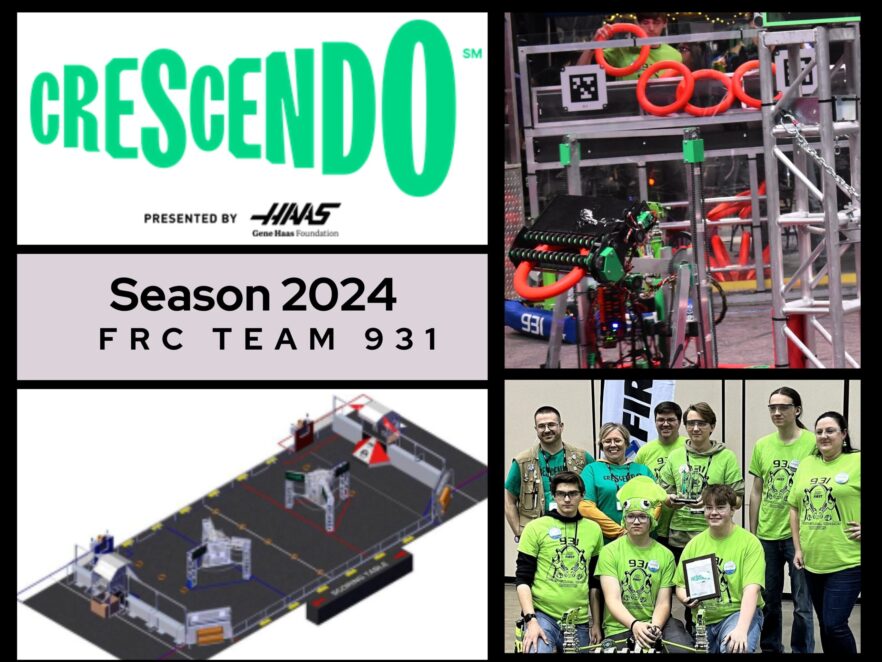
FRC Season 2024 Challenge
Crescendo is the game for the 2024 FIRST® Robotics Competition. The game is themed around music and involves two alliances, each consisting of three teams competing to perform various tasks such as shooting rings known as Notes into goals and hanging on chains at the end of the match.
Alliances work to score Notes at their Speaker, located on the left side of their opponent’s alliance station. Robots can also score Notes at their Amp on their side of the field. At the end of the match, robots move to their Stage and climb chains to earn additional points.
Our team won the “Industrial Design” award for our robot, was the alliance captain, took 7th place among 36 teams at the St. Louis Regional, and placed 4th and won the “Imagery” award in Alabama.
To learn how my FRC team 931 approached this challenge and the robot we built, press the “MORE” button below.

FRC Season 2025 Challenge
Reefscape is the game for the 2025 FIRST® Robotics Competition. Two alliances of three robots each work to score PVC pipes (called Coral) and playground balls (called Algae) into goals. At the end of the match, robots move to a truss structure called the Barge and climb metal Cages to earn additional points.
Alliances work to score Coral on their Reef, located at the center of their side of the field. Alliances can also score by retrieving Algae from their Reef and scoring them on their Barge. Algae can also be scored in the Processor for the opposing alliance’s human player to place in the Barge.
Robots can carry a maximum of one of each game piece at a time during a match.
To learn how my team approached this challenge and the robot we built, press the “MORE” button below.
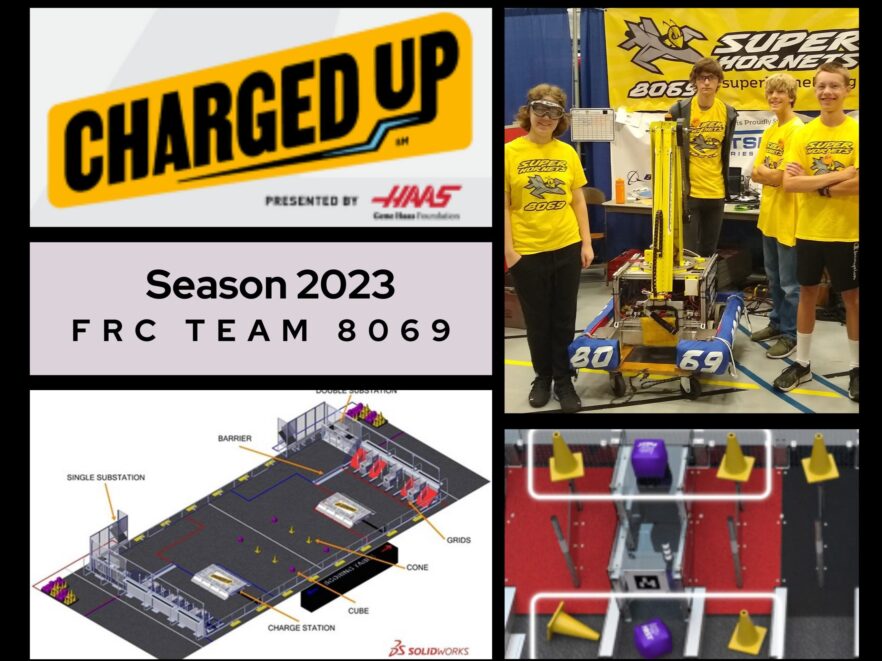
FRC Season 2023 Challenge
Charged Up is the game for the 2023 FIRST® Robotics Competition. The game is themed around two alliances of three teams each, competing to bring energy to their communities. Robots retrieve cones and cubes from substations, score them on the grid, and balance themselves on the charge station.
To learn details about our robot, please click on the “MORE” button below.
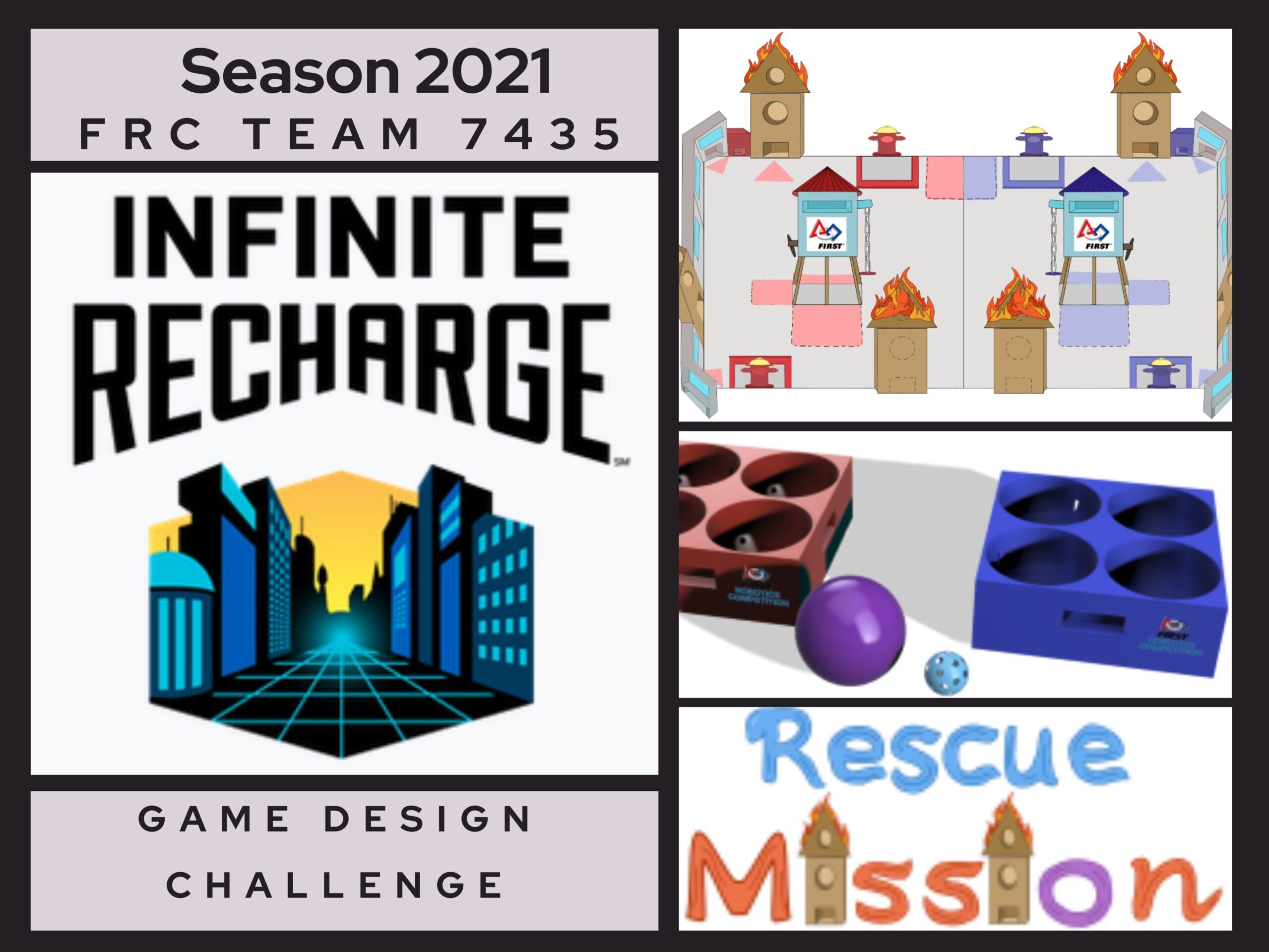
FRC Season 2021 Challenge
Since the COVID-19 lockdown was still in place, this FRC competition was held virtually. The Game Design Challenge was an opportunity to propose a new game for FIRST® Robotics, with one required element to use for the game (a chain).
To learn more about the game, please watch our recorded video by clicking the “MORE” button below.
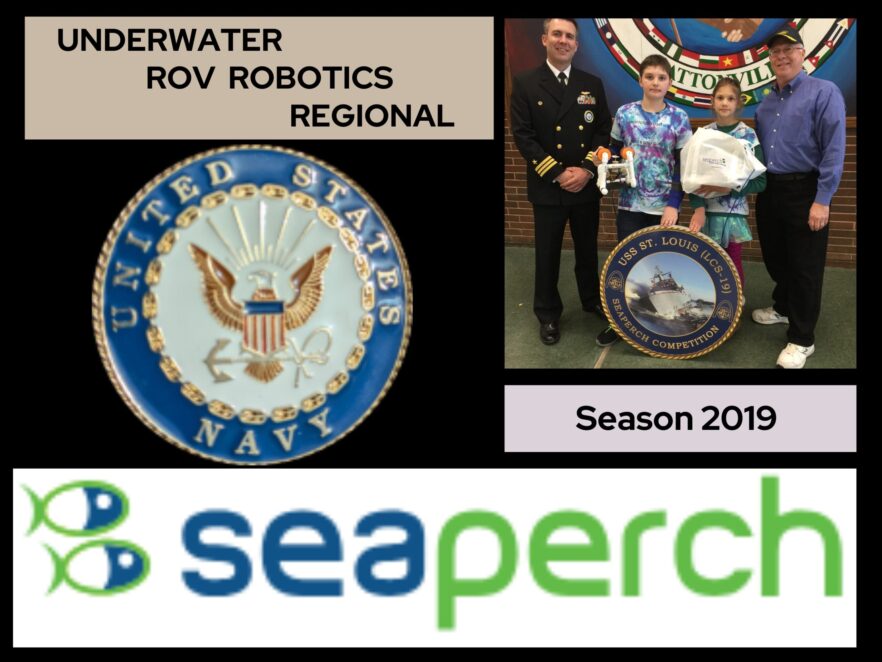
2019 SeaPerch Regional
The competition requires student teams to build an underwater remotely operated vehicle (ROV) that can successfully navigate an obstacle course and transport items through a challenge course. That year, the mission course was focused on rescue and recovery tasks inspired by the Thai cave rescue.
Each team received a basic kit in advance, which was used to build a team-designed SeaPerch (underwater drone). During the event, our ROV was navigated in the pool to test its maneuverability, control, and utility.
Our team competed in the Middle School category and placed 3rd in the “Obstacle and Mission” Courses. We received a commemorative medal to remember the event.
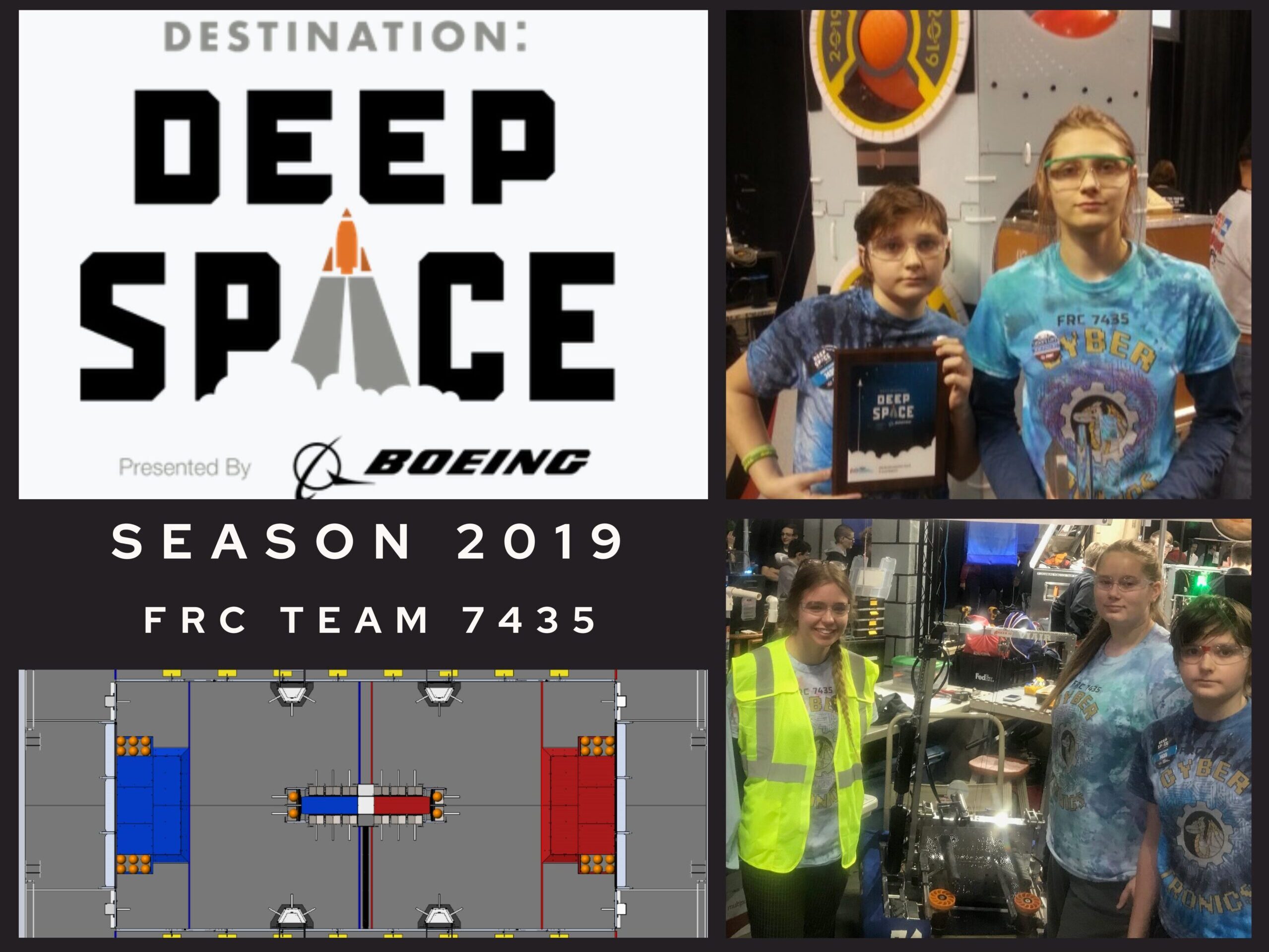
FRC Season 2019 Challenge
Destination: Deep Space is the game for the 2019 FIRST® Robotics Competition. The game involves two alliances of three teams each competing to place hatch covers and orange playground balls (“cargo”) on rockets and cargo ships before returning to their platform to climb at the end of the match.
A robot ending the match on platform level one will earn the alliance 3 points, while ending the game on level two will earn 6 points, and ending the match on level three will earn 12 points.
Our team performed well on the field and won a prestigious rookie “Inspiration Award” at the St. Louis Regional for our outstanding STEM volunteer service to the FIRST® community.
During the off-season, we demonstrated our robot at multiple outreach events, including the 2019 “The Spirit of St. Louis Air Show and STEM EXPO,” where it was a favorite among the aviation college students from South America, Children’s Museum visitors during their “Robotics Day at the Museum,” and World Wide Technology Raceway STEM Lane participants.
FTC Season 2018-19 Challenge
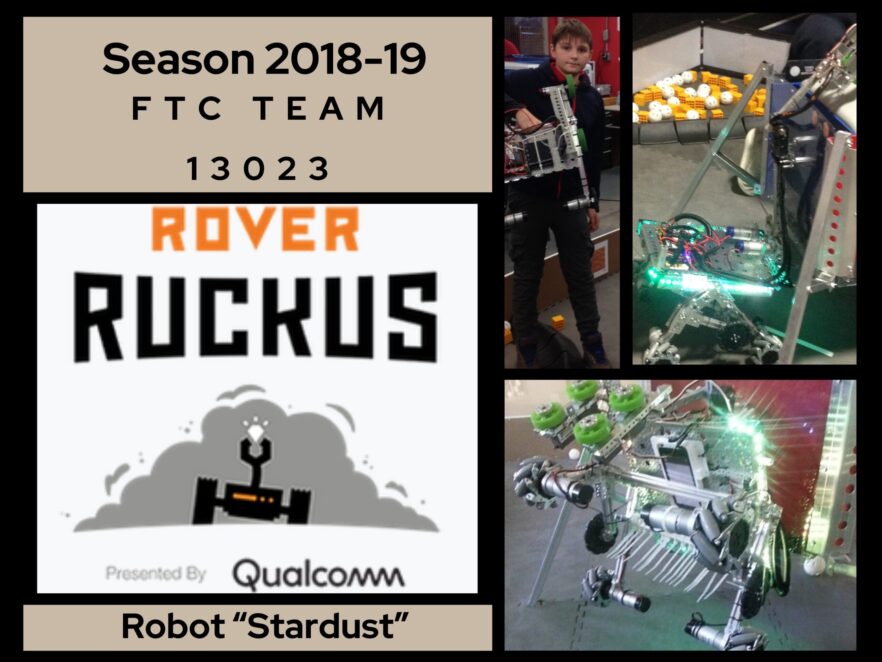
During the Rover Ruckus FIRST® Tech Challenge, two alliances of two teams each compete to collect minerals from the craters, located in the two opposite corners, and from the mineral depots in the other two corners. In the center of the playing field, there is a lander that all robots may mount at the beginning of the match. The lander has a designated side for the red and blue alliance, with separate compartments for silver and gold minerals.
Our team had two designs, so we split our members into two sub-teams to work on the robot prototypes of those designs, testing their performance on a genuine playing field. After evaluation, we considered the pros and cons of the robots’ performance and chose the optimal solution, building our competition robot. Despite that, our design was solid, but the code was not perfectly executed during the matches, which severely handicapped our chances of winning an award and qualifying for the state.
FLL Season 2018-19 Challenge
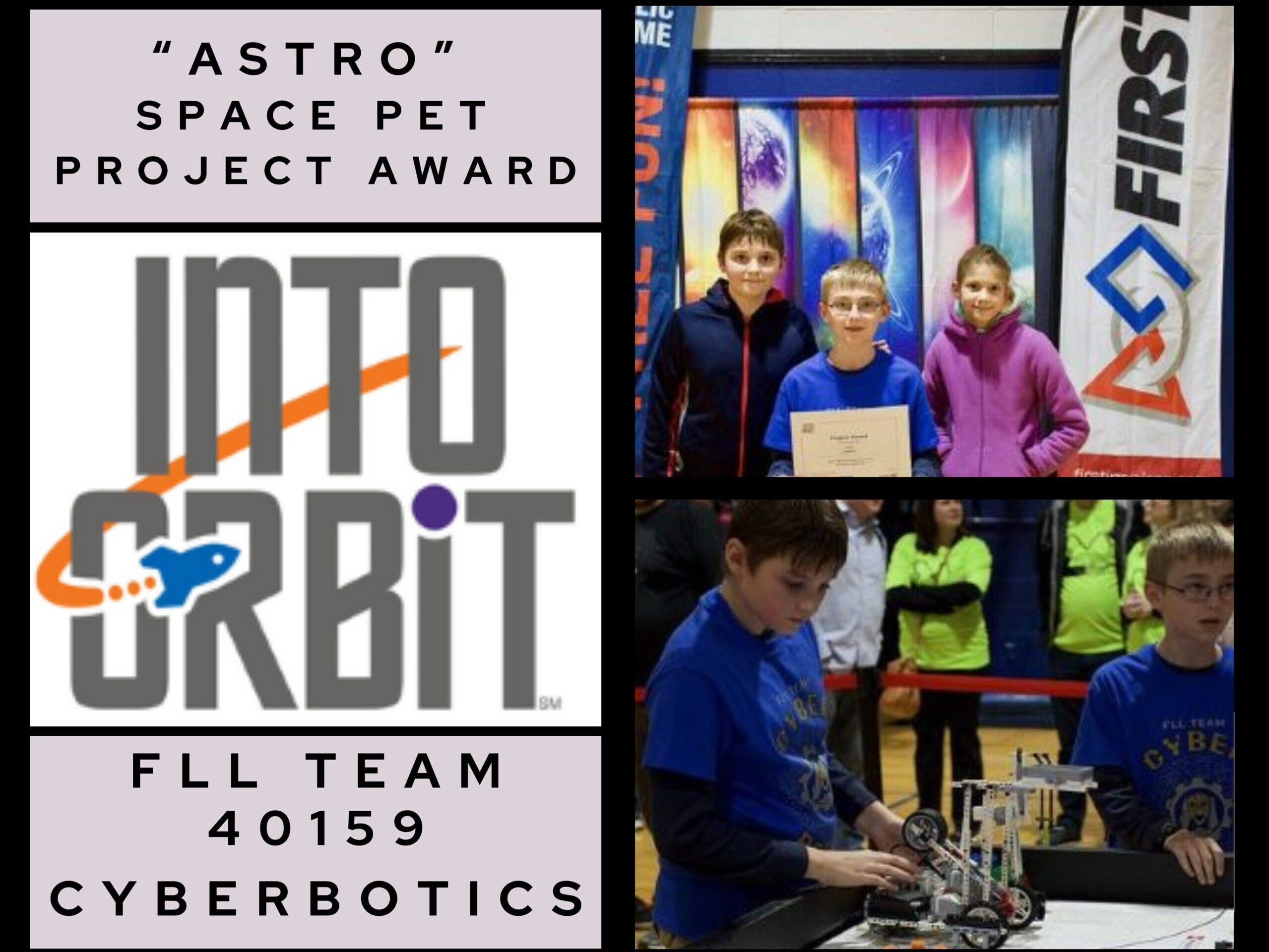
The 2018 FIRST® LEGO League Challenge was titled “Into Orbit,” where teams designed and programmed autonomous robots to complete missions related to space exploration. Participants had to solve problems using LEGO Mindstorms robots within a two-and-a-half-minute time frame during competitions.
Our team built a robot we named “Stardust” and successfully competed against other teams during the event. Additionally, our team came up with the project “ASTRO”, a space dog with a mission to keep astronauts company during space travel, which won us the project award at our local qualifier.
WRO Regional, Season 2018
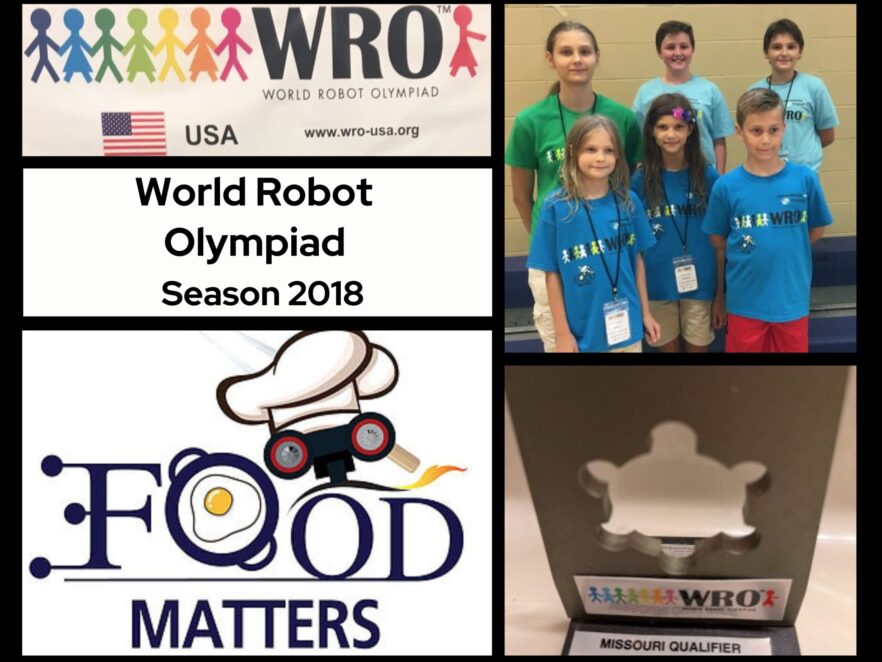
The World Robot Olympiad was one of the most challenging robotics competitions I have ever participated in. It resembles the First LEGO League but is much harder in terms of robot design and programming. Not only does the robot need to be autonomously programmed and complete its mission in a single run, but it also needs to be assembled from the parts during the competition from memory, without consulting any diagrams or other aids.
The 2018 World Robot Olympiad had four robot categories: Senior, Junior, Elementary (using your own Lego Mindstorms kit), and a youth category for ages 6-10 with Lego WeDo. My team competed at the elementary level (ages 11-13).
The Elementary Challenge was to build an autonomous robot that could sort farm products by quality or appearance. There were four kinds of qualities: fresh fruit, unripe fruit, imperfect or “ugly” fruit, and rotten fruit.
At the event, each team in the robot category was given 1.5 hours to assemble their robots (each robot enters the competition completely disassembled), test their code, and run practice rounds. We had three runs, and the best time and mission completion would determine our placement. The best score of your robot was considered the final score of your team. The competition was very intense, but we did very well, placing first in the Regional and automatically qualifying to compete at the National WRO, held at Fairmont State University in West Virginia.
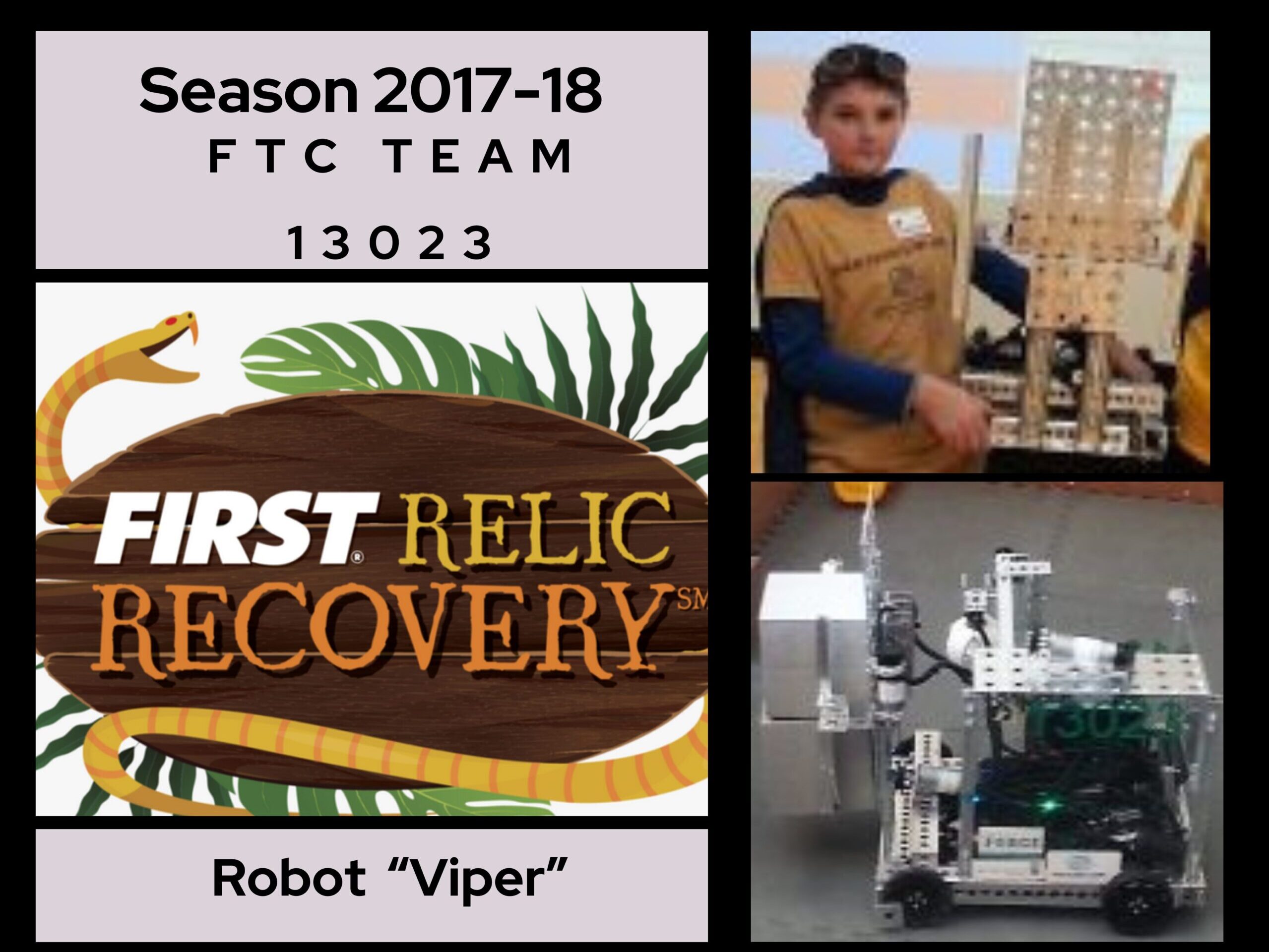
FTC Season 2017-18 Challenge
The object of the FIRST® Relic Recovery game is to attain a higher score than the opposing alliance by scoring Glyphs into the Cryptoboxes and completing rows, columns, and ciphers, transferring Relics to the Recovery Zone, retrieving Jewels, parking on the Balancing Stones, and navigating to specific parts of the Playing Field. The field is divided into a “red” and a “blue” side corresponding to the two alliances. In the center of the field is a taped-off area that holds the Glyphs.
Our “rookie” team robot, “Viper”, did well at all attended meets and our qualifier. Despite not winning any awards that year, our team members gained valuable experience in addressing obstacles when they arose. “Viper” attended multiple STEM community outreach events and was “loved” by many audiences we met.
2017 LEGO Superbots
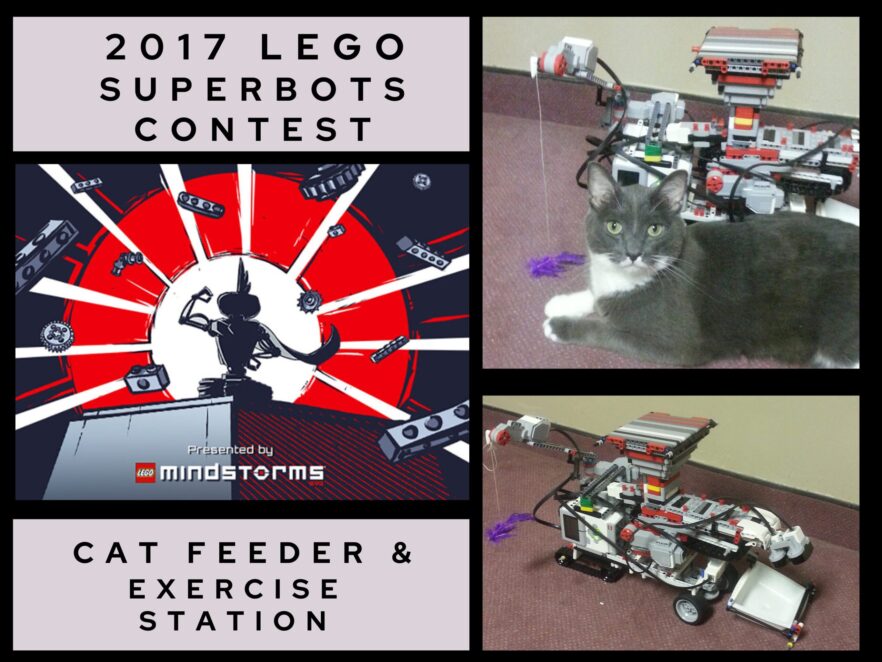
For this contest, I needed to build a robot using any generation of LEGO MINDSTORMS and then create a short video showing how my super robot helps me solve dilemmas or challenges – being “super”!
I built a “Cat feeder and exercise station” for my family pet to keep him company when we travel, and he is lonely at home.
I used the LEGO Mindstorms education set to create my bot.
To learn about this project and watch a short video of my robot in action, please click the “MORE” button below.
2015 Moonbots Challenge
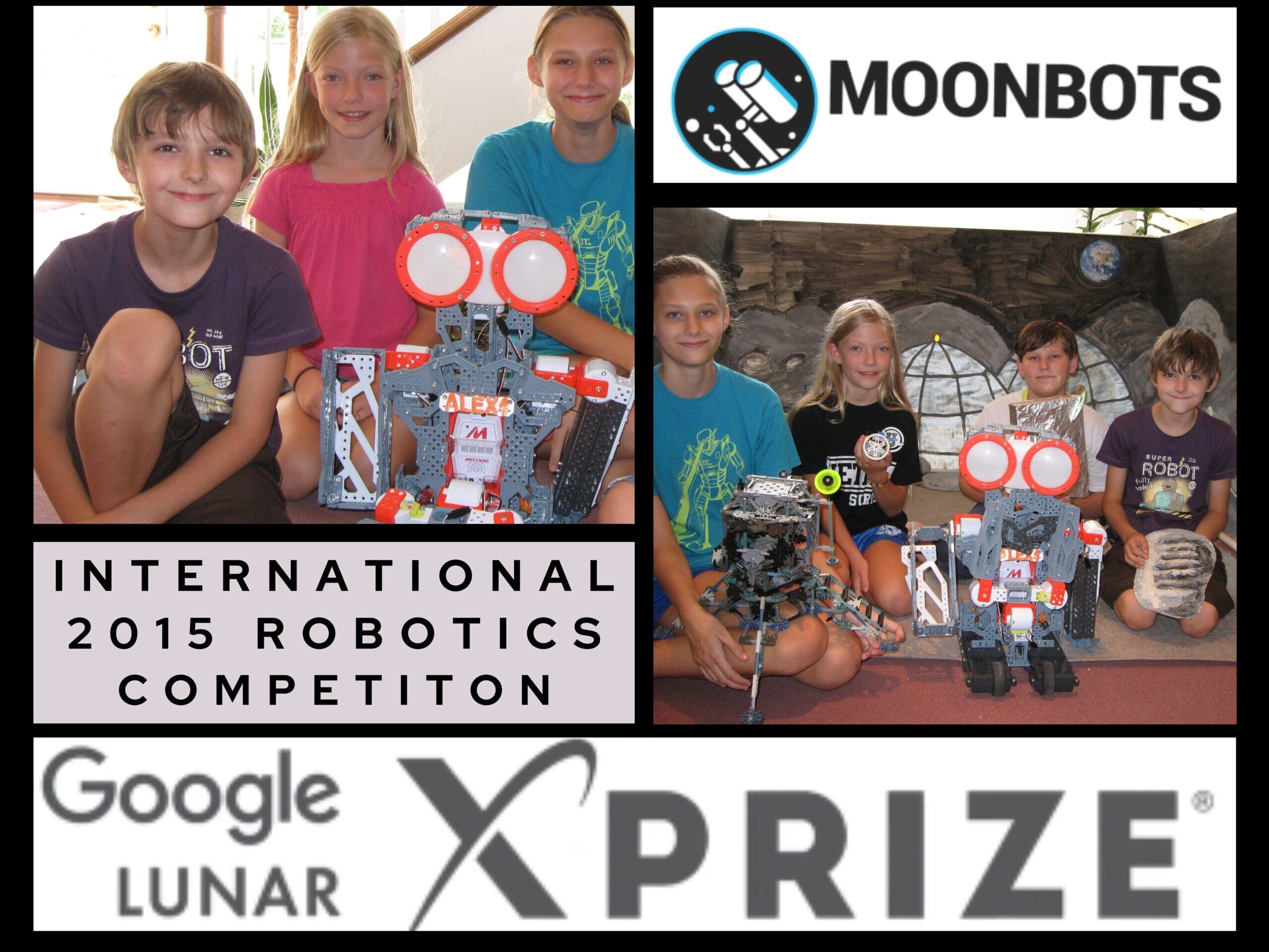
The 254 international teams of 2-4 people were asked to write a story or create a video essay explaining what inspires them about the Moon. Our team was among the top 30 selected by a panel of experts to move on to the next stage of the competition, where we designed a lunar landscape and built and programmed a robot.
In addition, we were required to develop gameplay that simulates a lunar mission for our robot, Alex-1, and then demonstrate our innovation to children and adults in our local community. Our public outreach was held in two Boys & Girls Clubs of St. Louis Metro, taught audiences about the Moon and the Google Lunar XPRIZE, and demonstrated how STEM could be fun by letting youth interact with our robot.